

There are lots of elders here and as the flowers are about to turn Gracie and I were out early this morning to collect them so we can make elderflower cordial. I used to do the same with my mum when I was little…

There are lots of elders here and as the flowers are about to turn Gracie and I were out early this morning to collect them so we can make elderflower cordial. I used to do the same with my mum when I was little…
There are 3 huge old vegetable patches in the walled garden that are overgrown with grass and weeds. Ed’s been working on one of the patches this week – and this morning he turned over half the soil ready for planting.
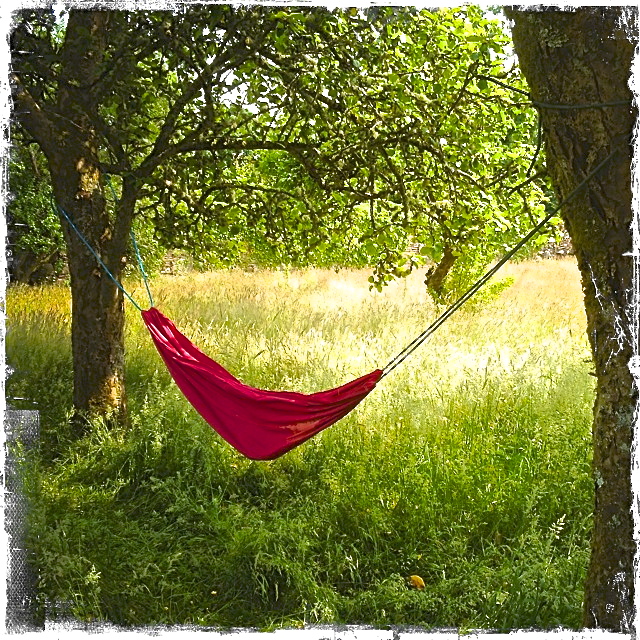
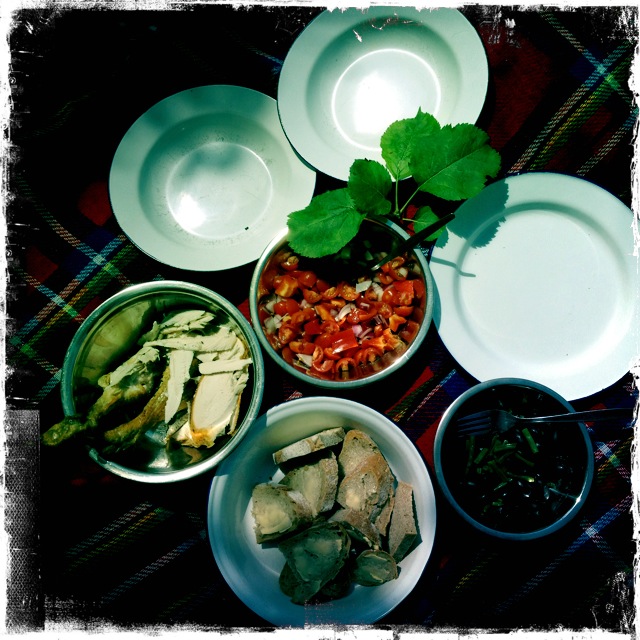
It was sunny and hot so we had a picnic lunch under the apple trees before getting down to some planting.
We put in several seedlings; sprouts, kale, purple sprouting broccoli, cauliflower, cabbage and leeks (as we’re a bit late to plant these from seed). Apart from the leeks I’ve discovered that these are all ‘cruciferous’ veg from the ‘brassica’ family. We also replanted what we think might be some ropey old courgettes (that were already in there) hoping to save them. From seed, we’ll plant beetroot, carrots, lettuce, spinach, turnips and beans (currently germinating in the kitchen) in the next few days.
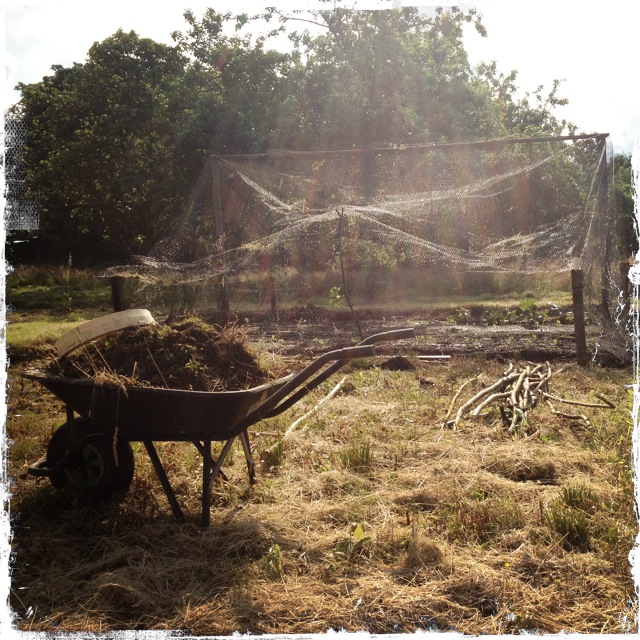
We’re building up our knowledge of brassica growing as we’ve discovered birds have a particular fondness for them; apparently wood pigeons like sprouts. So the whole patch needs to be protected with net. We also need to get some flat disc ‘collars’ that go round the base of all the stems to stop cabbage root fly laying their eggs down there.
So Ed made a frame from various bits of wood that he found in the old green house and lean-to’s and then managed to cobble together enough pieces of random net to go over the top. He doesn’t think the net will last a windy day though so it will need replacing in the next few days.
The upsum is that out of an acre of walled garden we’ll have cultivated just 6 by 12 meters – but at least it’s a start. If we’re successful with our beginners patch then it should supply us with nearly all our winter veg.
It didn’t take long. Gracie just told us “she’s growing like a barley”!
I do love a to do list – and as the list for this house will keep me going for the next 20 years I couldn’t be happier. Today’s list is:
Chase plumber for breakdown of costs for new hot water system
Book in insulation man
Get carpenter to fix leaking window
Pay locksmith
Sign contract for septic tanks
Get in planning applications for new biomass heating system
Apply for a building warrant
Price up wood pellets
Book in Green Deal Assessor
Research salvage cast iron radiators
But then Ed ran through his list with me and now I’ve got list envy….
Move oak tree from orchard
Cut the paths through the paddock
Cut back the rhododendron’s around lawn
Plant magnolia
Research compost toilet
Build sheds
Cut holly
Research yurts
Clear riverbanks
Scarify and aerate lawn
Dig drains
Weed control
The thing about scarifying (see Footprints on the Lawn April 21) is that we hadn’t quite taken on board that:
a) you have to wait for a decent enough dry spell to successfully pull out all the dead moss, which has been a bit of a waiting game on the wet West Coast
b) the elusive dry spell has had to coincide with Ed’s weekends at home
c) the whole process produces a huge amount of thatch (grass and dead moss) that must then be removed
The good news is that the sun’s been shining for days, Ed’s home for the weekend – and enough of the moss has turned brown to get started (luckily we got the moss killer to lawn ratio right and the grass is still alive).
As I’m now proficient on the ride-on lawnmower, I mowed and Ed and Gracie followed behind with the scarifier. By late afternoon the lawn was hidden under a frightening amount of thatch – and as the mower couldn’t cope with hoovering it up we had to resort to hand raking it into lots of separate piles, loading up the mini-trailer and ferrying backwards and forwards to the compost heap. We were out there till late in the evening.
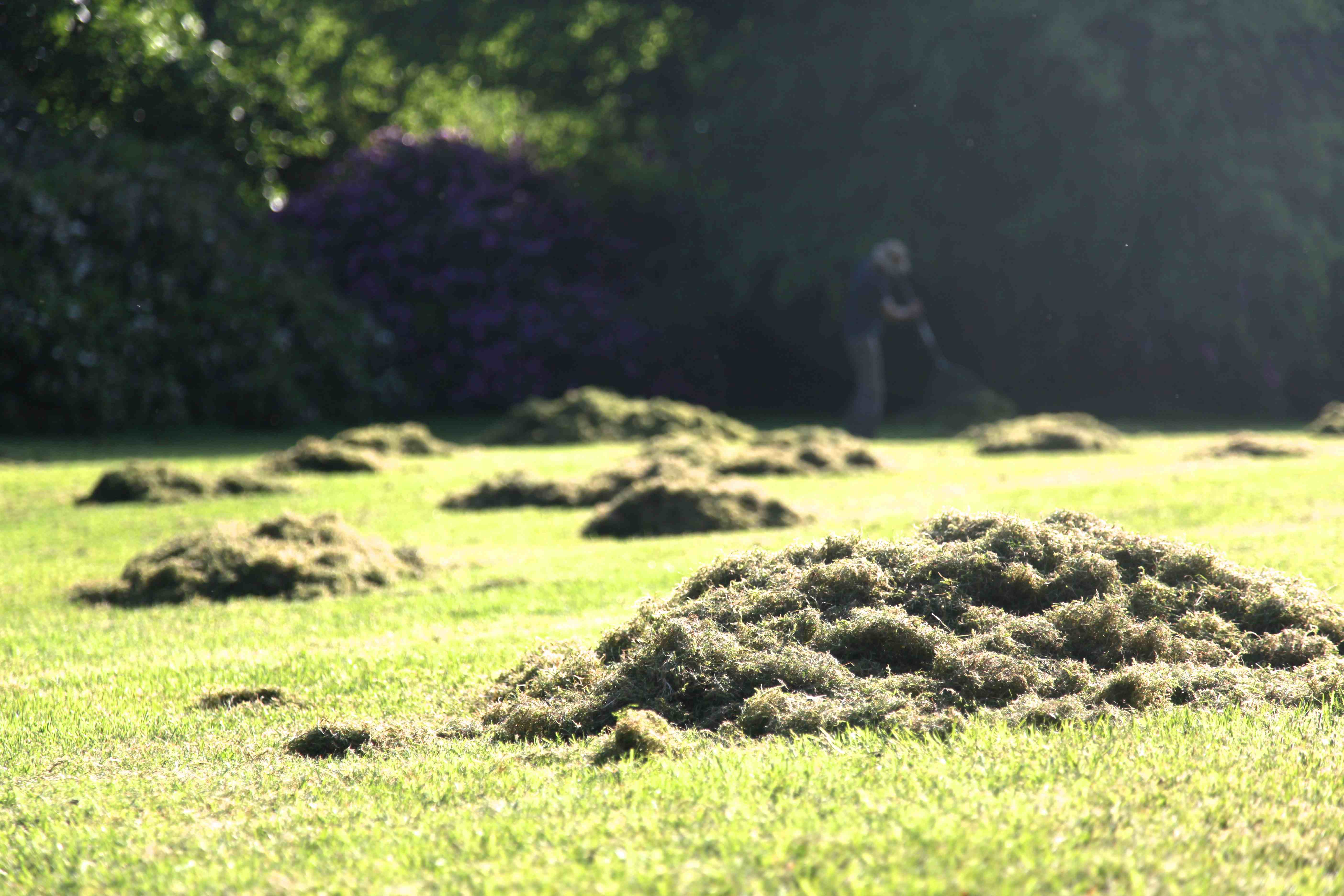
Even so, we’re nowhere near done. There’s still loads of moss to kill that was missed from last time – and today we only managed a quarter of the lawn.
I’m now beginning to realise why the mention of us scarifying raised so many local eyebrows – but we’re nothing if not tenacious…
One of the old sycamore trees by the paddock has a long, low-hanging, gnarly branch running along a stretch of the paddock fence for about 20 feet – and it’s in danger of breaking off under it’s own weight. Ed’s said for some time that it needs a crutch to support it so this evening the three of us headed over to a hazel tree by the burn.
Ed’s knowledge of trees is pretty good and he tells me that hazels are good for coppicing (a kind of pruning for trees so they grow back quickly and produce lots of wood) so he had the hazel in mind for the job. I thought it was a machete in his hand but apparently it’s a ‘bill hook’ specifically used for cutting wood. He shaped a Y section out of the branches and then hauled it over to the paddock. Together we managed to manoeuvre it into place. Here it is…
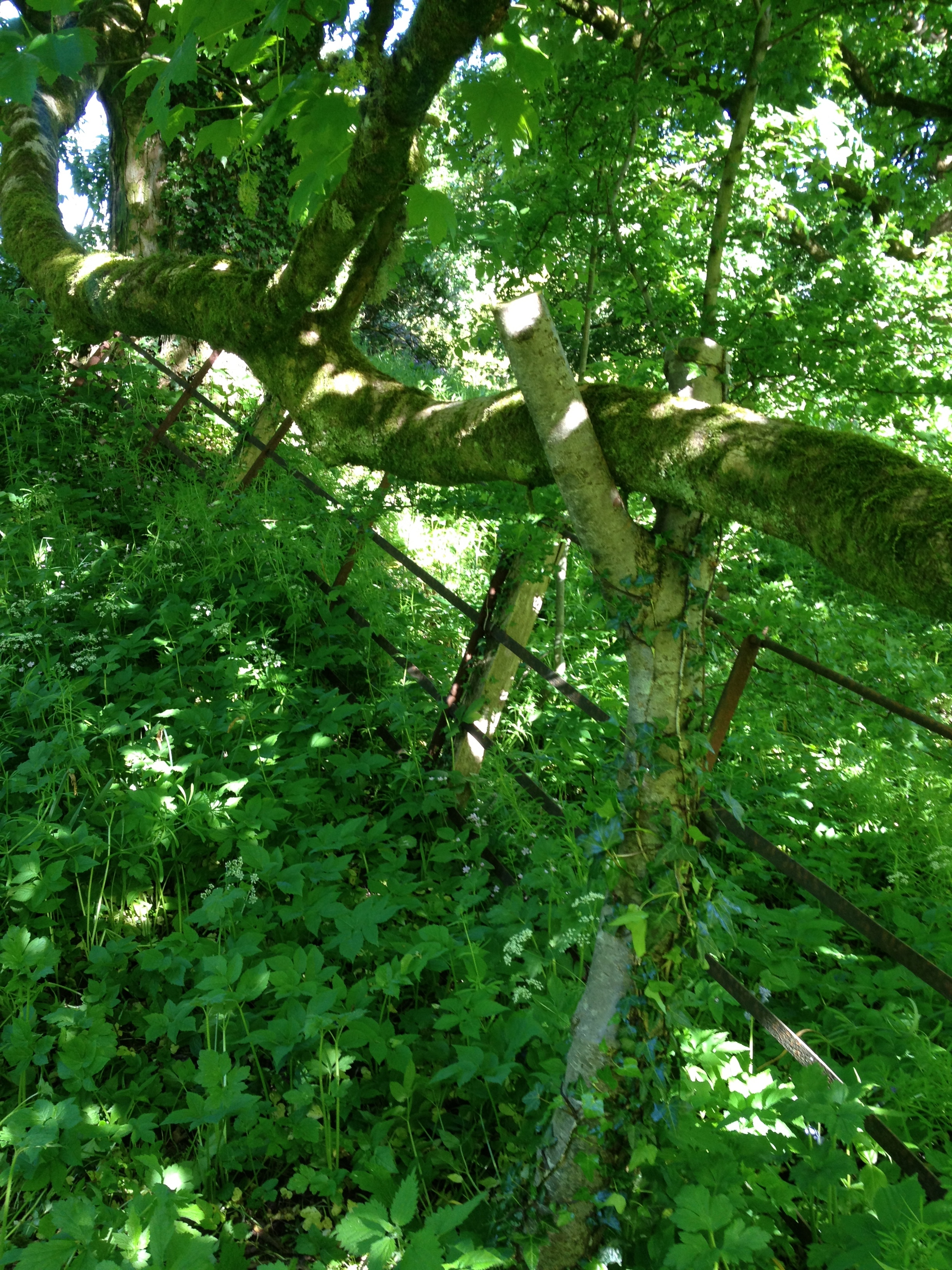
The branch still needs protecting where it’s sitting in the y – to prevent the bark rubbing off when the wind blows. A bit of old carpet from the kitchen is earmarked to do the job.
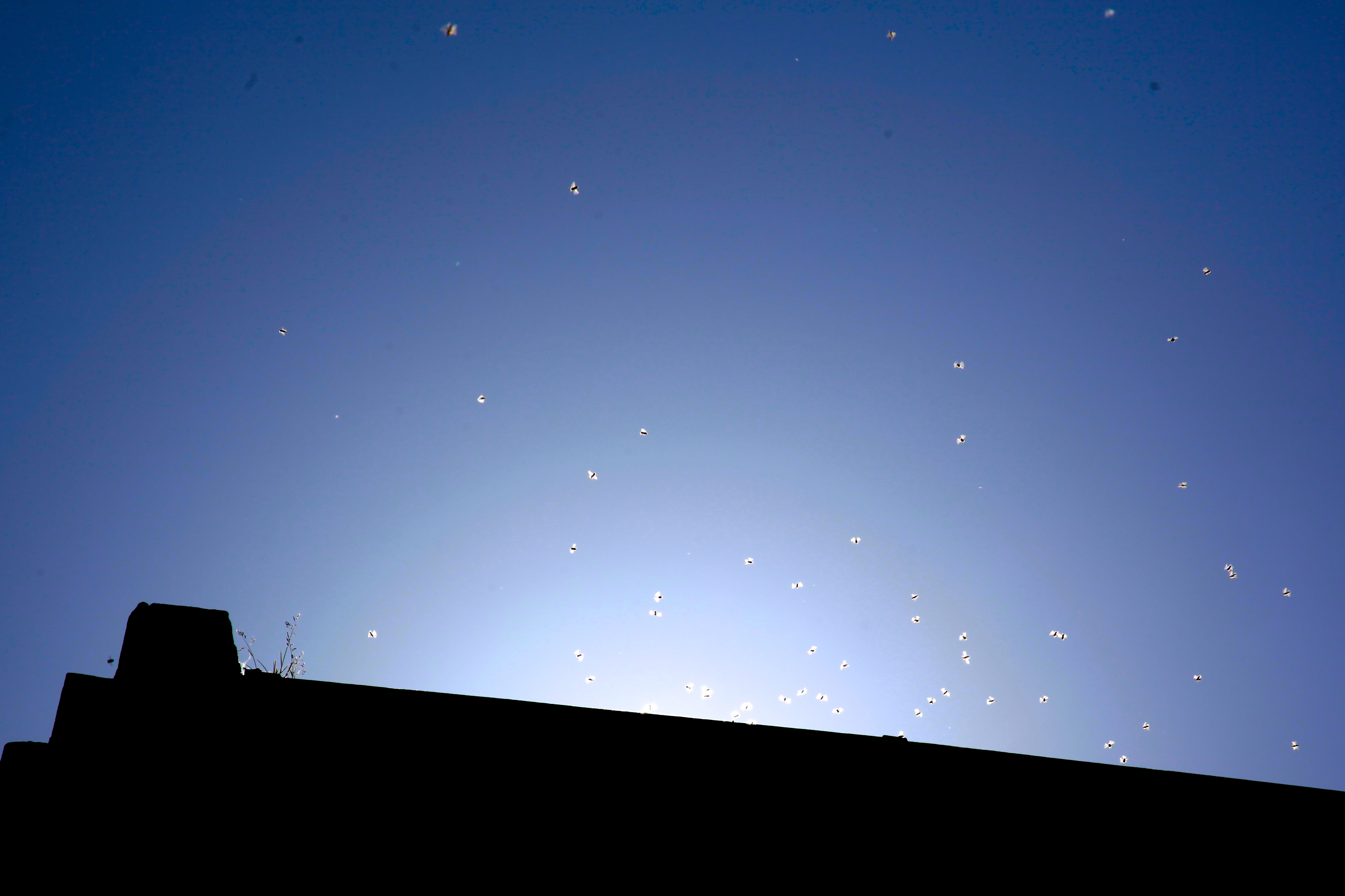
Last Sunday evening Ed noticed a wasp or two outside and heard a significant buzzing above. Then way up around the main roof gutter at the back of the house he spotted a small swarm. The gutter is 3 floors high so we can’t get up for a closer inspection (not that we’d want to) and if there’s a nest up there it’s likely to be in the attic space anyway….
The thing about the attic though is the size of the hatch… It’s a very tight squeeze and certainly not the size of hatch you want to be squeezing yourself out of with a swarm of angry wasps in hot pursuit. Hmmmm…
Then a few days ago I also noticed a buzzing. This time outside the front door – and when I put Gracie down for her nap a good number of what looked like honey bees were bobbing around outside her bedroom window and one or two had made their way inside. I have to confess I wasn’t totally sure how to tell the difference between wasps and bees but having looked on the internet I’m pretty convinced these are bees. Now I’m wondering whether it’s bees at the back of the house too. Either way it’s certainly been a problem before; after a bit of investigation I discovered several bits of old loo paper shoved between the sashes of Gracie’s window and dozens of dead bees caught up inside…
Guests are now here to stay and yesterday when I was putting Gracie down again my friend Louise came running up the stairs; ‘I think you better come and look at this!…’ Outside the kitchen window the mini-swarm on the roof had turned into a massive swarm about 30 feet high and 10 feet across. It quickly reduced in size but the thought of thousands of wasps suddenly appearing out there is not very nice to say the least.
I’ve since been spending quite a bit of time on the phone…
The man from the council can help us with wasps but he can’t help us with bees and at the moment he can’t help us with anything because he’s off on holiday for a week. The man from Rentokil can deal with wasps AND bees – but there are 2 kinds of bees (don’t ask) and if these are honey bees we have to get a bee-keeper to come and try and save the nests first. I’m loving that – so I found the local bee-keepers association and as luck would have it there’s a bee-keeper who lives in our village – I’ve left him a message. The carpenter’s coming on Monday to widen the hatch…
I’m not sure how this is all going to end but Ed’s now home for the weekend and a quick look through the binoculars has at least established that it’s bees at the back of the house and not wasps after all – which at least feels more comfortable.
It would be lovely to think the nests could be retrieved and that our kindly local bee-keeper might adopt them or perhaps deposit them in a local wood – but this whole bee thing has given Ed a twinkle in his eye and I think he may have other ideas…
We’ve been mulling over what to do with the paddock and while we mulled, wild flowers started to grow. Wherever we ended up we’d always hoped to have a wild flower meadow so we decided not to mow the paddock and see what happened. Already we’ve had bluebells, birds-eyes, campions, wild primrose, herb robert and pignut – and around a dozen more flowers we’ve still to identify…
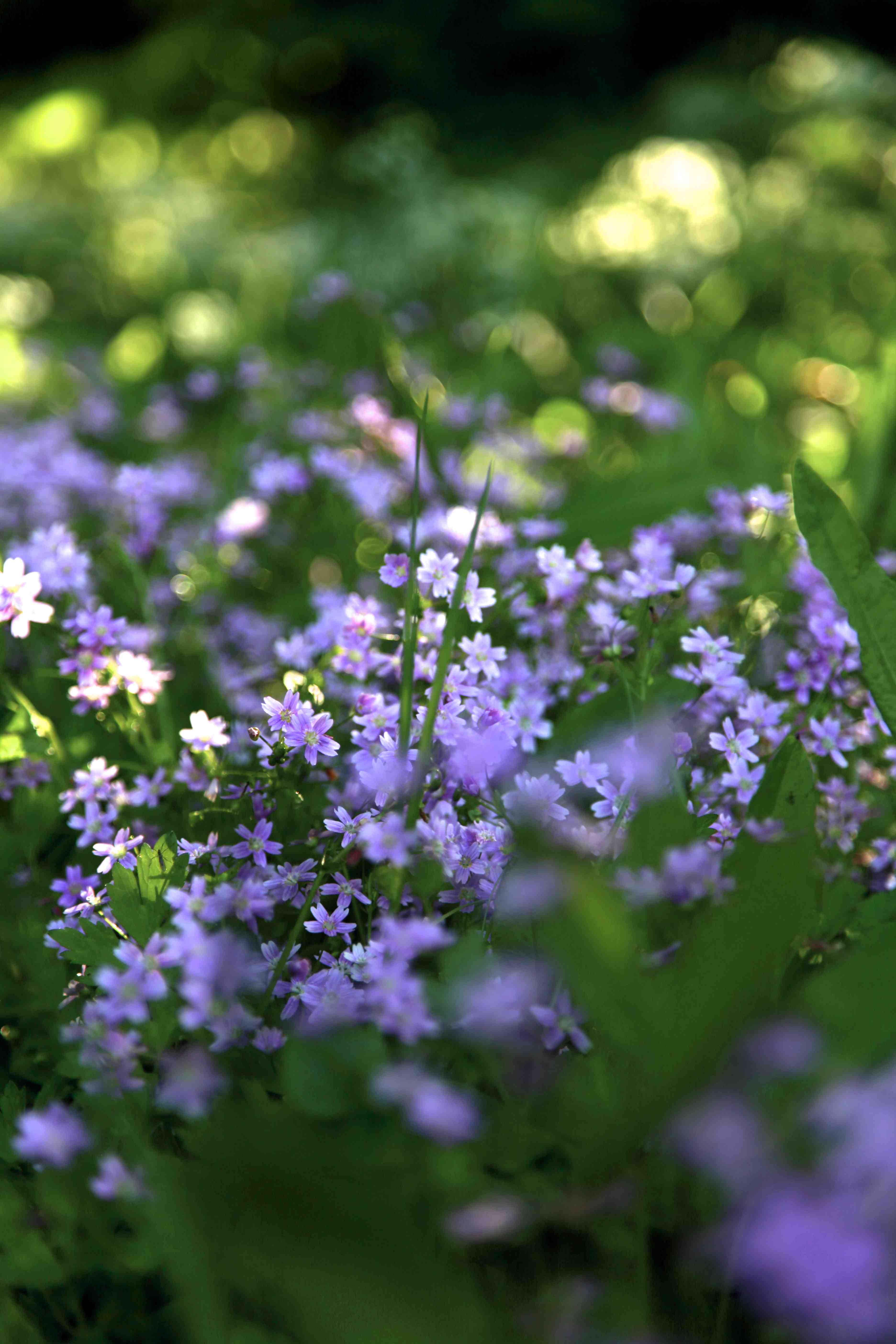
But as the flowers have grown the grass has grown too and now it’s taking over, along with the nettles and docks. A bit of research tells us that wild flower meadows come up in fields that are left to grow where animals have been grazing. We have rich soil here (you can tell by looking at it and lots of nettles are also a sign apparently) which is great for grass and veg’ but not so good for wild flowers. If we put animals in there they would take a lot of the nutrients out of the soil by eating the grass – and at the same time create a good bed for next year’s flowers by churning up the ground.
So animals sound like the answer. Oh if it was that simple. Much of the fence needs to be fixed and there are rhododendrons creeping over the sides which are poisonous to horses, sheep and cattle. As always here, nothing is ever straight forward. An alternative would be getting in a JCB to take off the top layer of soil in the paddock which is way out of our budget.
So if we want a meadow next year, we’ll have to fix the fence, prune the rhododendrons (which are running rampant everywhere but that’s a whole other story) and then find some animals before the end of summer. As there are other more pressing jobs to get done, it looks like our wild flower meadow is going to have to wait.
Ed’s just cleared a path through some of the undergrowth at the back of the walled garden and spotted this…
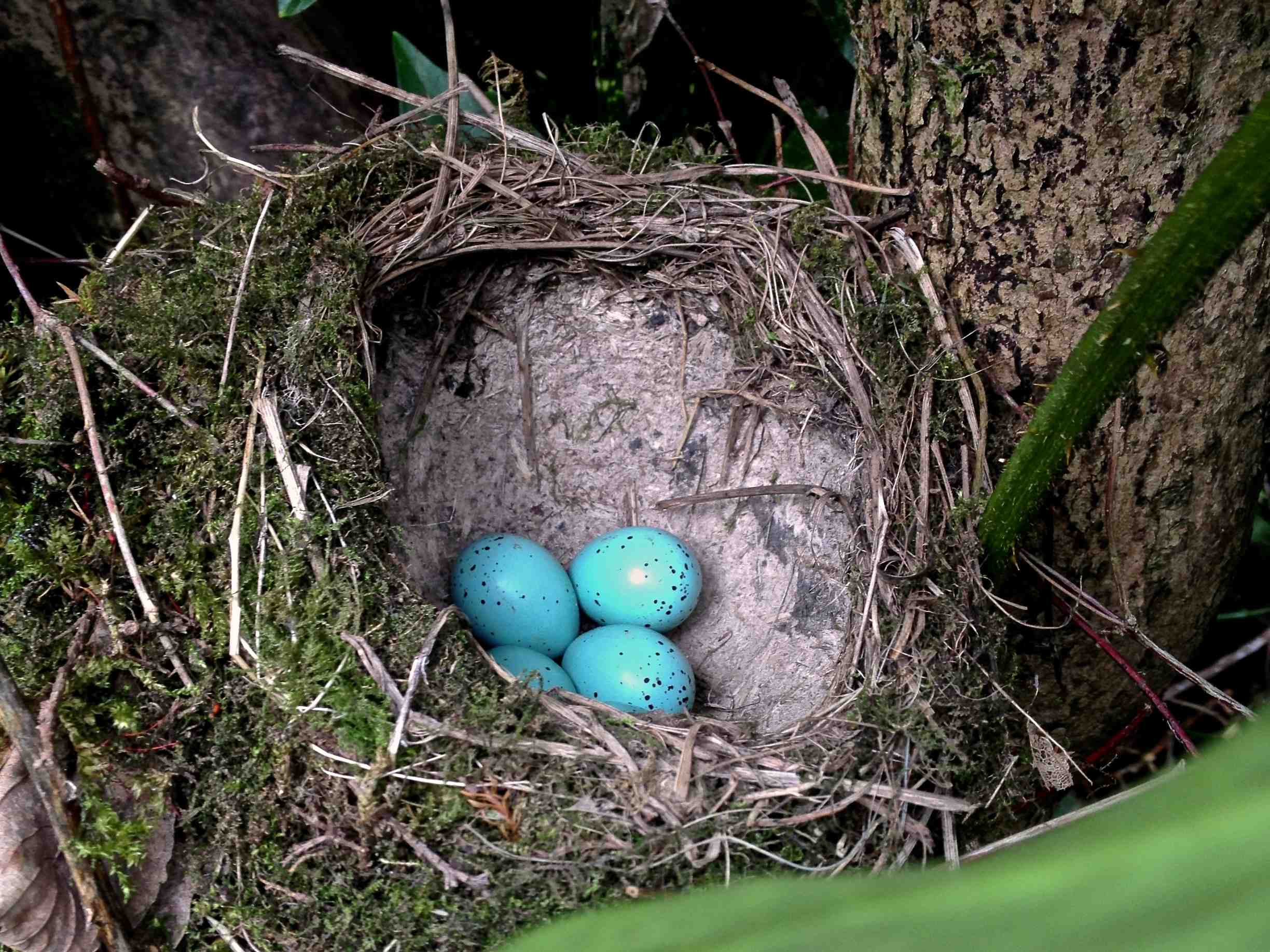
We’ve family staying so after taking a careful look we’ve had lots of fun trying to identify what eggs they are from pictures on the web. We’re settling on song thrushes. Julie our new neighbour’s already informed us that a song thrush lives on our drive – and we’ve since seen one on the lawn and think we’ve heard it’s song. It’s not too hard to identify as it sings its song twice over …
http://www.rspb.org.uk/wildlife/birdguide/name/s/songthrush/index.aspx
I’ve been told they used to be quite common in the countryside but are seen less now because of intense farming and the loss of hedgerows. So it’s lovely to know we might soon have another 5 living here…
 A Castle in the Sky